
H. pylori and Gut Health:
The Hidden Cause of Chronic Digestive Distress, Bloating, and Stomach Discomfort

$54.99 Original price was: $54.99.$44.99Current price is: $44.99.
What Is H. Pylori? Symptoms, Causes & Why Your Stomach Needs You to Know
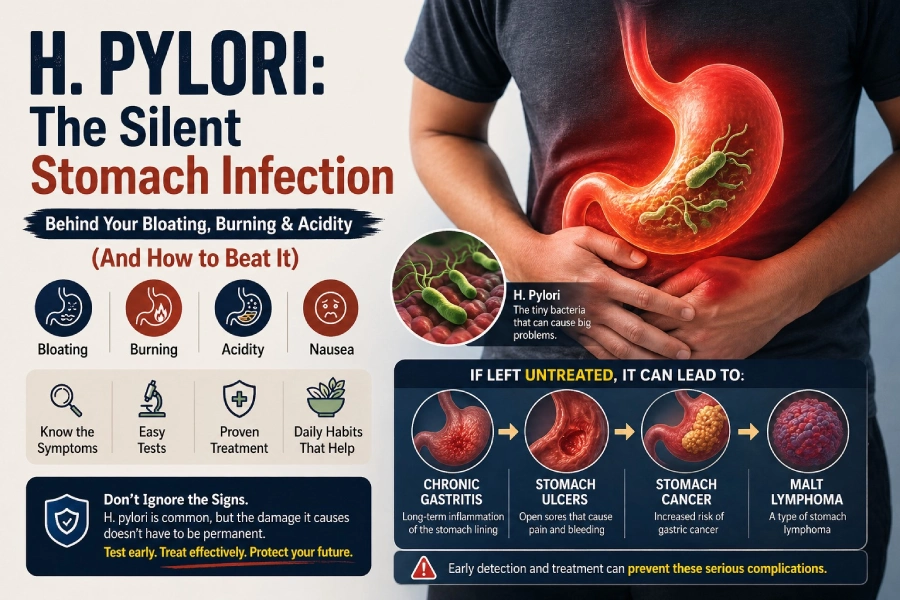
Here’s something most people don’t know. That stomach pain you keep blaming on spicy food? The bloating after every meal? The acidity that won’t listen to antacids no matter how many you chew? For nearly half the world’s population, the real reason isn’t stress or your dinner. It’s a tiny bacteria called H. pylori, quietly living in the stomach lining and slowly causing trouble. It’s common, it’s treatable, and once you know what to look for, you can actually do something about it.
Let’s get into it.
So What Is H. Pylori, Really?
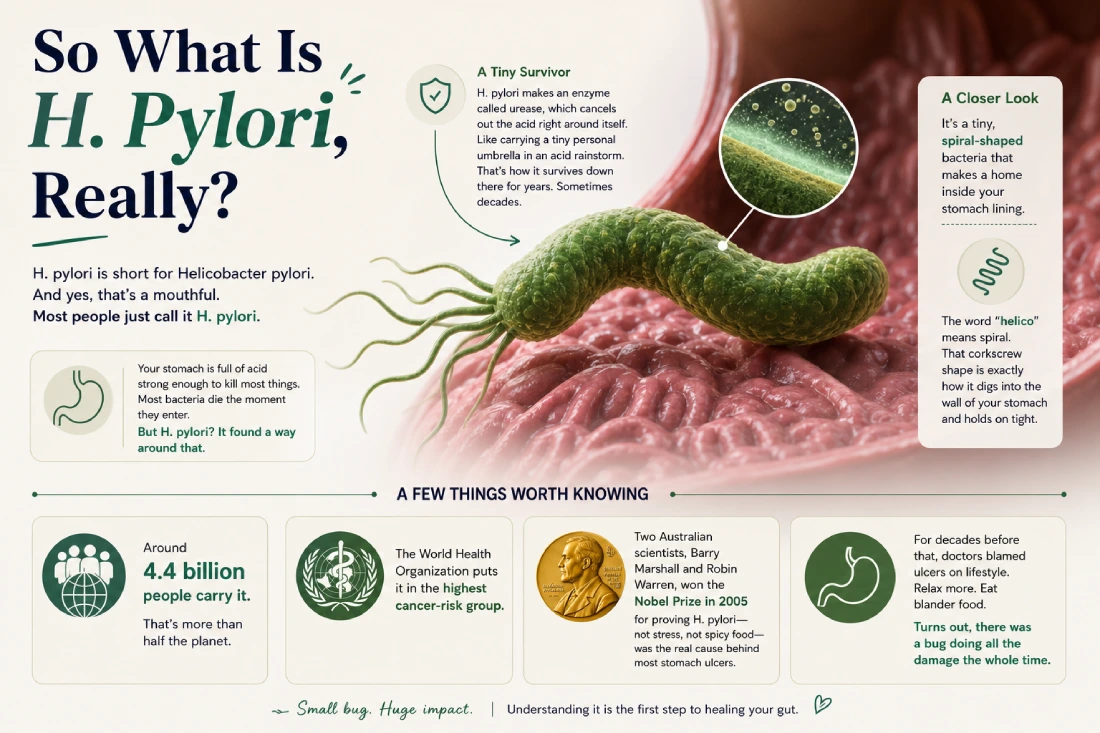
H. pylori is short for Helicobacter pylori. And yes, that’s a mouthful. Most people just call it H. pylori.
It’s a tiny, spiral-shaped bacteria that makes a home inside your stomach lining. The word “helico” means spiral. That corkscrew shape is exactly how it digs into the wall of your stomach and holds on tight.
Now here’s the strange part. Your stomach is full of acid strong enough to kill most things. Most bacteria die the moment they enter. But H. pylori? It found a way around that. It makes an enzyme called urease, which cancels out the acid right around itself. Like carrying a tiny personal umbrella in an acid rainstorm. That’s how it survives down there for years. Sometimes decades.
A few things worth knowing:
- Around 4.4 billion people carry it. That's more than half the planet.
- The World Health Organization puts it in the highest cancer-risk group.
- Two Australian scientists, Barry Marshall and Robin Warren, won the Nobel Prize in 2005 for proving H. pylori — not stress, not spicy food — was the real cause behind most stomach ulcers.
For decades before that, doctors blamed ulcers on lifestyle. Relax more. Eat blander food. Turns out, there was a bug doing all the damage the whole time.
Where to Look For ? Do I have it?
Here’s a weird fact that surprises most people. About 8 out of every 10 people walking around with H. pylori feel absolutely nothing. No pain, no bloating, no sign at all. The bug just lives there, quiet as anything.
But when it does start acting up, usually it’s because it’s caused inflammation in the stomach lining (gastritis) or an actual sore (ulcer). And that’s when people finally notice something’s wrong.
The Common Signs
- A burning or dull ache high up in the stomach, usually worse when you're hungry
- Pain that eases up a bit after you eat or take an antacid, then comes right back
- Bloating, and that full feeling even after small meals
- Burping more than usual
- Nausea, sometimes vomiting
- Not feeling hungry like you used to
- Heartburn and a sour, metallic taste
- Losing weight without meaning to
The Quieter Signs Nobody Talks About
These are the ones people dismiss for years:
- Being tired all the time for no clear reason
- Low iron levels (H. pylori can cause slow, invisible bleeding)
- Low B12
- Bad breath that doesn't go away no matter how much you brush
- Random headaches
When to Stop Reading and Call a Doctor
If any of these show up, don’t wait. Like, really don’t wait:
- Sharp, sudden stomach pain
- Black or tar-like stools
- Throwing up blood, or vomit that looks like coffee grounds
- Trouble swallowing
- Fast weight loss with no reason behind it
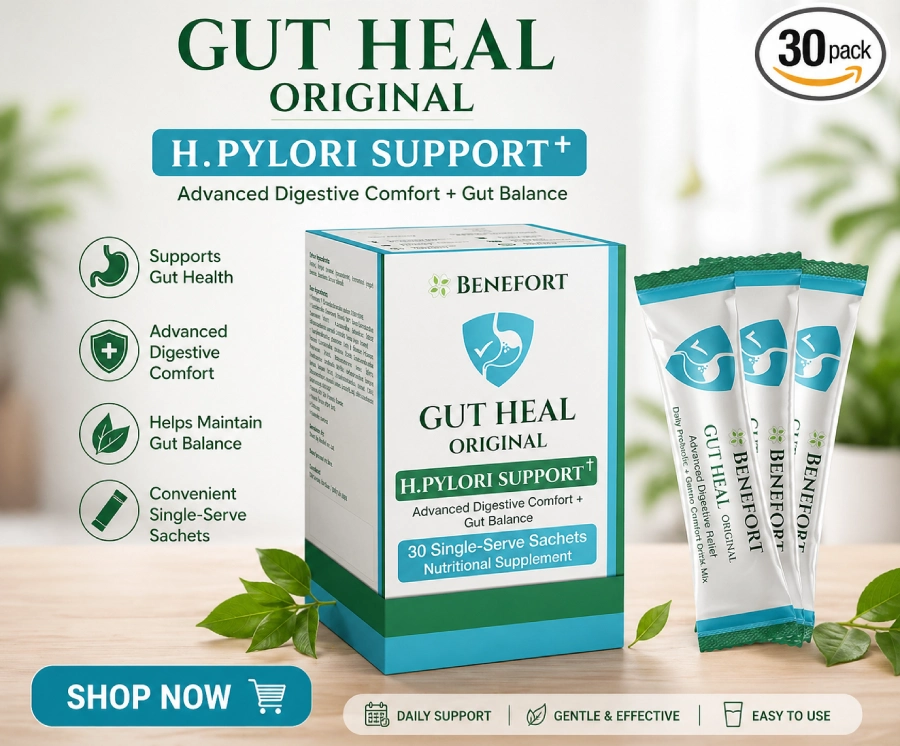
Living with daily stomach discomfort is just exhausting. The flare-ups, the anxiety about every meal, the bad sleep. A lot of people find that adding daily stomach support helps them feel more in control while they work on the root problem with their doctor. GUTHEAL Original with Pylopass is one of those — a single-serve sachet made specifically for H. pylori balance and stomach comfort. It’s not a replacement for medicine, but it can make the daily reality a lot calmer.
How Did I Even Get This?
This is usually the first question people ask after testing positive. And the answer might surprise you.
You probably didn’t do anything wrong. Most people catch H. pylori as kids and carry it around silently for years — sometimes their whole life — before it ever causes a real problem.
How It Moves Between People
There are two main ways:
- Through saliva. Sharing spoons, water bottles, glasses, toothbrushes. Kissing. Even feeding kids by tasting their food first.
- Through contaminated food or water, or not washing hands well after the bathroom.
Most infections happen during childhood. Once it’s in, it stays for life unless treated. Which is why entire families often test positive together. If one person has it, chances are the others in the house do too.
Who’s More Likely to Have It
Your risk goes up if you:
- Grew up in a crowded home
- Don't have consistent access to clean drinking water
- Live in or come from a developing country
- Have a parent, sibling, or spouse who tested positive
- Grew up eating from shared plates and common dishes
The Numbers Are Actually Eye-Opening
The geography of H. pylori tells a real story:
- In developed countries: only 10 to 20 adults out of 100 carry it
- In developing countries: 70 to 90 out of 100 adults
- In the United States: about 35 out of 100 adults carry it overall. Rates climb with age — around 20 out of 100 for adults under 30, and close to 50 out of 100 for adults over 60
So if you have it, it’s not about your hygiene or your habits. It’s mostly about where and how you grew up. The water. The sanitation. The environment.

Straight answer: yes, but only if you ignore it. The bug itself is very treatable today. The danger is what happens when it just sits there for years doing damage in the background.
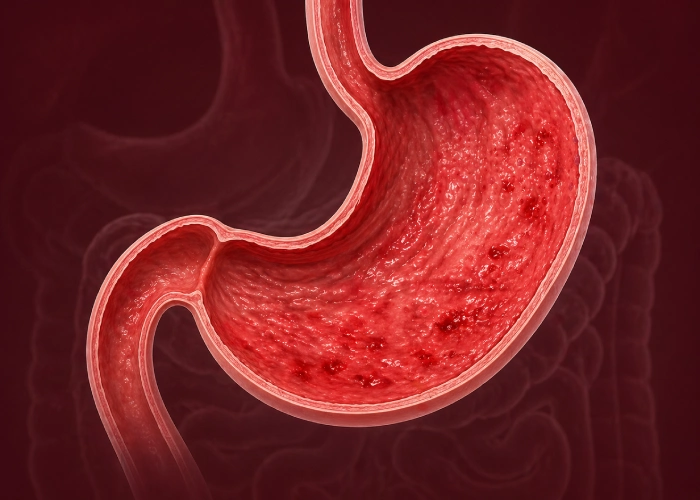
Almost everyone with H. pylori ends up with some level of gastritis — which is just a fancy word for inflammation in the stomach lining. That constant, low-level burn most people call "regular acidity"? A lot of the time, that's gastritis. And the bug is the reason.
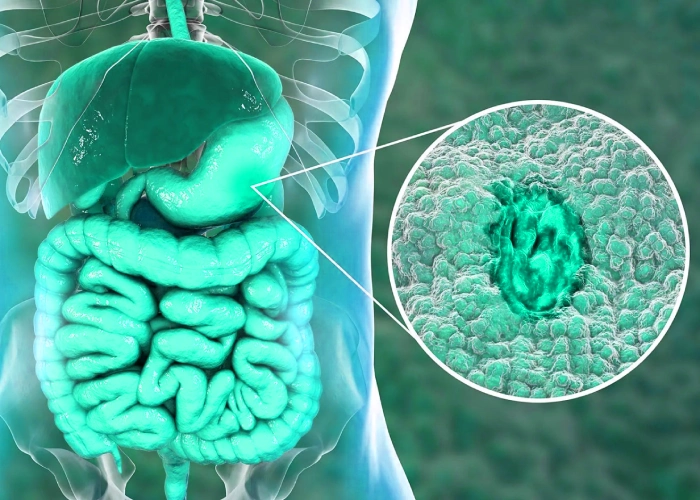
H. pylori is behind 8 out of 10 stomach ulcers and 9 out of 10 ulcers in the upper small intestine. An ulcer is an open sore on the inside of your stomach. Painful. Sometimes bleeding. And the reason most people finally get tested.
This is the one that makes doctors serious about H. pylori. Long-term infection is linked to about 9 out of 10 non-cardia stomach cancers. It's the biggest preventable cause of stomach cancer worldwide. Now — most infected people won't get cancer. That's important to say. But since H. pylori is the main risk factor you can actually do something about, clearing it early matters a lot.
A Few Other Things It Can Cause
- MALT lymphoma (a rare type of stomach cancer)
- Iron and B12 deficiency anaemia
- Newer research is even linking it to heart and brain issues
But here’s the reassuring part. The scary stuff is preventable. Test early, treat it, and support your gut daily — your risk drops fast.
Getting Tested Is Easier Than You Think
Most people put off testing because they imagine something painful or complicated. Honestly? It’s usually not.
There are four main ways doctors check:

You drink a small solution, wait a bit, then blow into a bag. If H. pylori is there, the test picks up a specific gas in your breath. Fast. Painless. Very accurate.

Checks for antibodies. The catch — it only tells you if you've ever been exposed, not if the bug is active right now. Not very useful as a first test.

A small sample is checked for H. pylori proteins. Simple and reliable.

Saved for more serious cases. A thin camera goes down through your mouth to check things and take a tiny sample.
One thing most people don’t know — if you’re taking acid-blocker medicine like omeprazole or pantoprazole, stop it 2 weeks before testing. And stop antibiotics 4 weeks before. Otherwise, the results get thrown off.
Okay, What Actually Gets Rid of It?
Here’s the good news. H. pylori is treatable. Cure rates go above 90% today. But the treatment has been changing, and it’s worth understanding why.
The Standard Medical Approach
According to current guidelines (ACG 2024 and Maastricht VI 2022), the main options are:
- Bismuth Quadruple Therapy. This is now the first choice in most places. It mixes an acid-blocker, bismuth, and two antibiotics for 10 to 14 days. Works well.
- Triple Therapy. An acid-blocker plus amoxicillin and clarithromycin. Still used, but not as reliable as it used to be.
- Vonoprazan-Based Dual Therapy. A newer option with a stronger acid-blocker and one antibiotic.
Here’s the Problem Most Blogs Don’t Talk About
H. pylori is learning to beat its own medicine. That’s not a scare tactic — it’s real.
About 22 out of 100 cases worldwide are now resistant to clarithromycin, one of the main antibiotics used. In the US, the number is climbing fast too — about 1 in 5 cases are now resistant, largely because most Americans have taken antibiotics multiple times over their lives for other infections like sore throats, ear infections, and sinus issues. Over time, the bacteria learn to adapt. The result? Almost 1 out of every 3 first-round treatments fails on the first try, and many patients end up needing a second round with different drugs.
This is why the whole conversation is shifting. Doctors aren’t just prescribing antibiotics anymore. They’re adding support care — smart probiotics and postbiotics that help the medicine actually work.
Why Probiotics Are Getting All the Attention Now
Multiple studies have shown that adding the right probiotics during antibiotic treatment:
- Raises the cure rate from about 70% to 84%
- Cuts down side effects like diarrhea, bloating, and nausea
- Helps rebuild the good gut bacteria that antibiotics wipe out
And one particular strain has been getting a lot of attention — Lactobacillus reuteri DSM17648. It’s sold as Pylopass. This one is different from regular probiotics. It doesn’t just add good bacteria. It physically grabs onto H. pylori in the stomach, clumps it together, and helps your body flush the clumps out. Almost like pulling weeds instead of trying to fight them.
The studies are solid:
In 2024, a trial published in Clinical and Translational Gastroenterology found that adding Pylopass to standard treatment pushed the cure rate up to 96.7%, compared to 86% in the placebo group.
Earlier studies showed real drops in H. pylori levels after just 2 to 4 weeks of Pylopass alone.
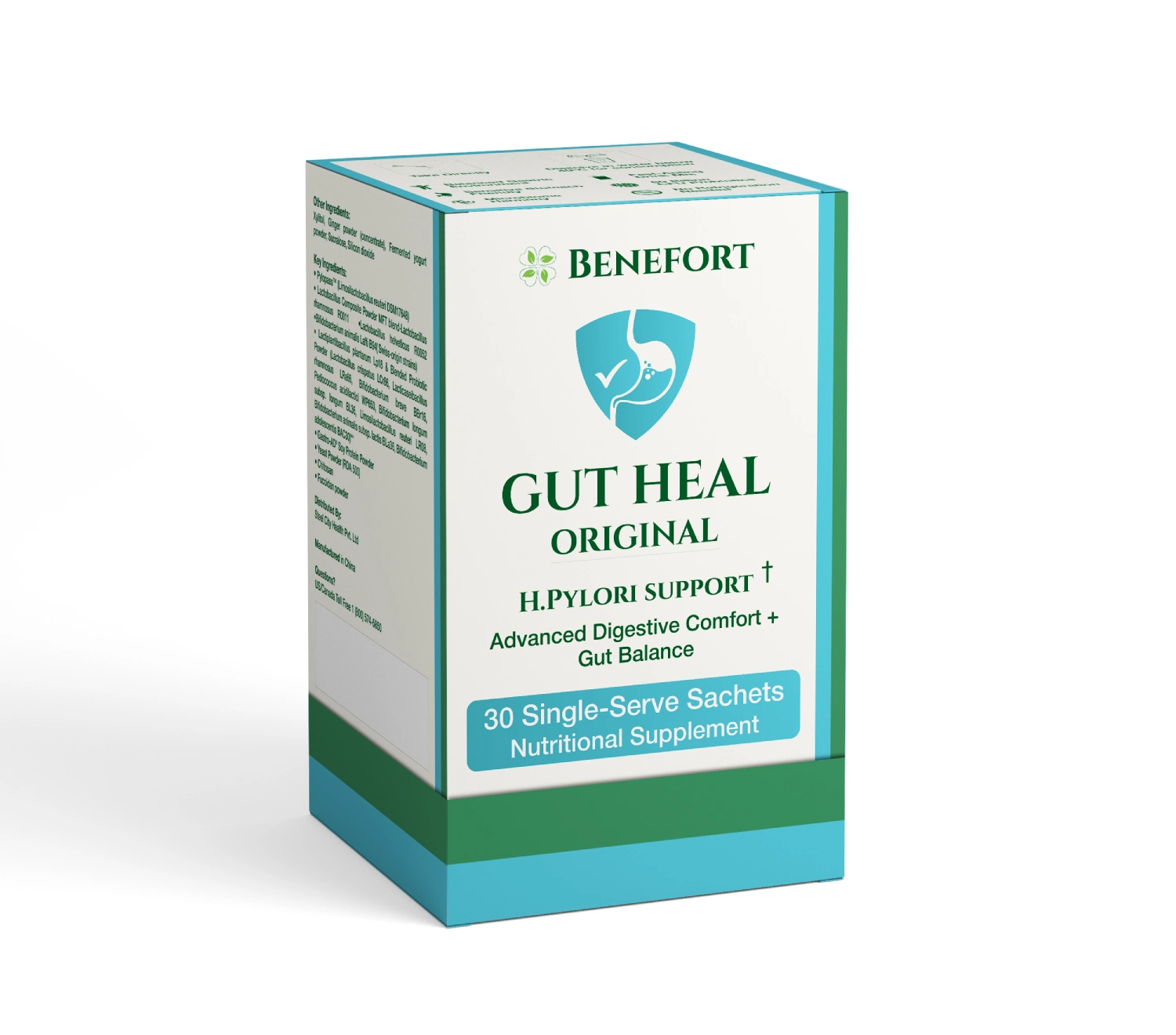
This is the exact strain used in GUTHEAL Original with Pylopass — a daily sachet that combines Pylopass with Swiss-origin probiotic blends, Gastro-AD fermented soy protein for stomach comfort, functional yeast, and chitosan fiber. It’s made for people dealing with H. pylori-related stomach trouble. Whether they’re going through antibiotic treatment or just looking for steady daily support, it’s built to work alongside what the doctor prescribes. Not instead of.
The Daily Stuff That Actually Helps
Medicine handles part of the problem. The rest is what you do every day — what you put in your body, and how you treat your gut between meals.
Foods That Help
- Yogurt, kefir, and fermented foods. Add good bacteria.
- Broccoli sprouts. Contain a compound called sulforaphane that fights H. pylori.
- Cranberries. Stop H. pylori from sticking to the stomach wall.
- Green tea. Slows the bug down.
- Turmeric. Calms inflammation.
- Raw honey, especially Manuka. Natural antibacterial.
- Olive oil. Actually shown in studies to suppress H. pylori.
- Fatty fish with omega-3. Lowers stomach swelling.
Foods to Skip (Especially During a Flare-Up)
- Coffee and anything caffeinated — push up acid
- Alcohol — irritates the stomach lining
- Fizzy drinks — make reflux worse
- Spicy food, at least for now
- Processed, salty foods — high salt plus H. pylori is a known bad combo for cancer risk
- Pickles and heavily preserved foods
- Painkillers like ibuprofen or aspirin — they tear up the stomach lining
Daily Habits That Protect Your Stomach
- Wash hands properly before meals and after the bathroom. Like, actually properly — soap, 20 seconds.
- Drink clean, filtered or boiled water.
- Don't share utensils, glasses, or toothbrushes — especially if anyone in the house tested positive.
- Eat smaller meals more often. Five or six small meals beat three big ones.
- Chew slowly. Eat calmly. Stop eating on your phone.
- Don't lie down for 2 to 3 hours after eating.
- Keep stress in check. It won't cause the infection, but it absolutely makes symptoms worse.
- Support your gut with a good probiotic or postbiotic every day.
The truth is, consistent small habits beat big dramatic changes every single time. Your stomach doesn’t want a crash program. It wants steady, calm care.
Your Stomach’s Been Trying to Tell You Something
Here’s what I want you to take away from all this.
H. pylori is common. It’s often silent. And it’s almost always brushed off as “normal acidity.” But if your stomach has been acting up for weeks, months, maybe years — that’s not normal. That’s your body asking for attention.
What to do next is simple:
- Take the symptoms seriously. Stop calling it just gas.
- Get tested. A breath or stool test is quick and gives you a real answer.
- Follow through on treatment if the test comes back positive.
- Support your gut every day with good food, clean water, and a trusted probiotic.
Your stomach does so much work for you quietly, every single day. It deserves more than just being ignored until something goes wrong.
If you’re looking for daily stomach support backed by real research – not just claims, GUTHEAL Original with Pylopass® offers a thoughtful solution.
It features the clinically studied Pylopass® strain (DSM17648), paired with Swiss probiotic blends and Gastro-AD, delivered in a convenient single-serve sachet.
Portable, practical, and easy to make part of your routine.
Because consistent stomach support should feel simple, reliable, and stress-free.
Questions People Actually Ask
Will H. pylori go away on its own?
No. It pretty much stays for life unless it’s treated. Lifestyle stuff can ease the symptoms, but clearing the bug itself usually needs antibiotics from a doctor.
Is it contagious?
Yes. It moves through saliva, shared dishes, kissing, and unclean food or water. That’s why entire households often have it.
What does H. pylori pain actually feel like?
A dull or burning pain high up in the stomach. Usually worse when you’re hungry. Eating or taking an antacid helps — for about an hour. Then it comes back. Most people describe it as hunger pain that keeps returning.
Does stress cause it?
No. Stress doesn’t give you the infection. But if you already have it, stress can absolutely make the symptoms louder and trigger flare-ups.
How long does treatment take?
Usually 10 to 14 days of medicine, then a follow-up test about 4 weeks later to confirm the bug is gone. More than 9 out of 10 people are cured on their first round.
Can probiotics alone cure H. pylori?
Not fully. But tested strains like Pylopass can reduce the bacterial load and make the antibiotics work better. Best used as support alongside medical treatment, not instead of it.
What foods fight H. pylori naturally?
Broccoli sprouts, green tea, cranberries, Manuka honey, olive oil, and turmeric all have some effect. They won’t fully clear the bug, but they help reduce its load and calm the stomach.
Previous Story
How Probiotics Help Improve Digestion and Daily Wellness
Next Story