

$54.99 Original price was: $54.99.$44.99Current price is: $44.99.
Introduction
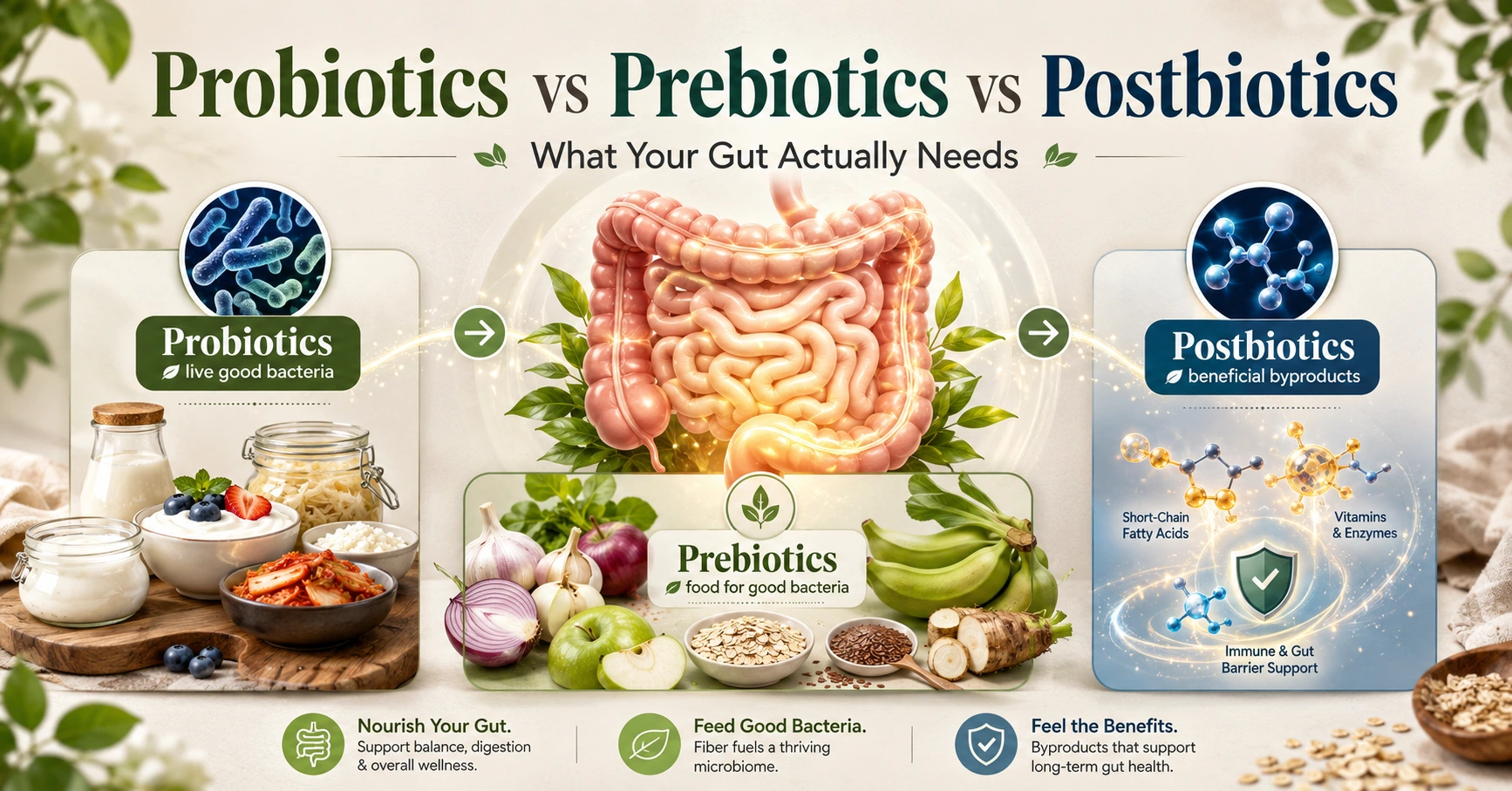
Probiotics, prebiotics, and postbiotics all support gut health, but they do different jobs.
- Probiotics are live microorganisms that may provide a health benefit when taken in adequate amounts.
- Prebiotics are fibers or compounds that feed beneficial gut bacteria.
- Postbiotics are preparations of inactivated microorganisms, with or without their components or metabolites, that may provide a health benefit when supported by evidence.
This guide breaks down what each one actually does, so you know which one fits what you’re dealing with.
If you have ever stood in a supplement aisle staring at three products that all claim to help your gut, you already know why these words get confusing. The names sound alike and the labels rarely spell out the difference.
By the end of this guide, you will know what each term means, what problem it addresses, and how to pick the right one for your own goals, without confusing general gut support with medical treatment.
Quick Answers
Here is the short version, in case you just need a fast answer.
- Probiotics are live microorganisms, including certain bacteria and yeasts, that may support gut health when taken in adequate amounts.
- Prebiotics are fibers or compounds your body does not fully digest. Beneficial gut bacteria use them as food.
- Postbiotics are inactivated microorganisms, their components, or their metabolites that may support gut health without needing live bacteria.
All three work as a team. Prebiotics feed probiotics, and probiotics produce postbiotics. You do not always need all three at once, but knowing how they connect makes it much easier to pick the right one for your own gut concerns.
Signs Your Gut Might Need Some Support
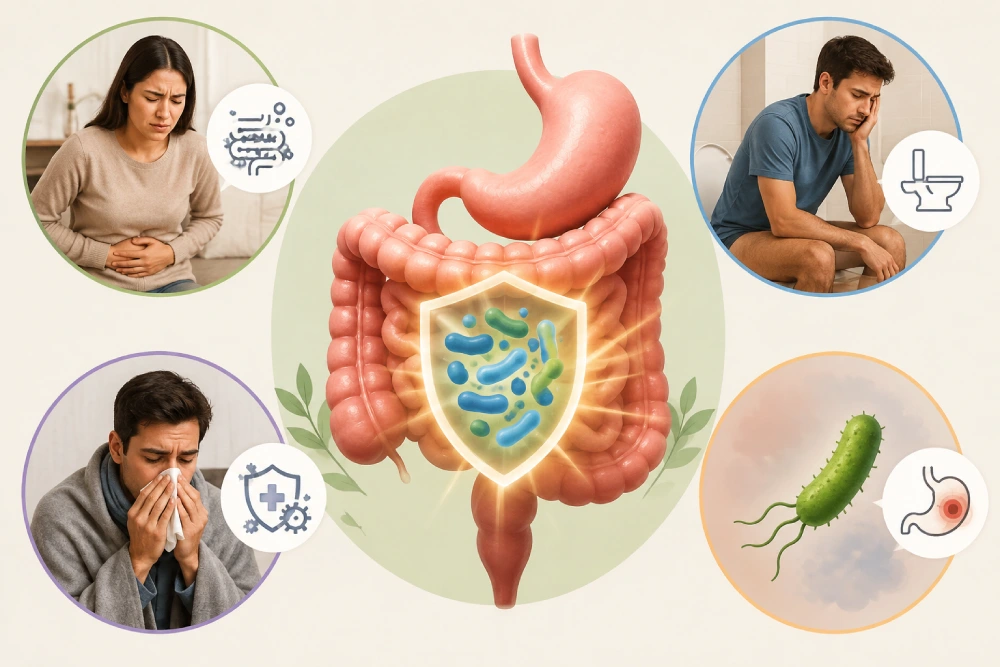
Before jumping into definitions, it helps to name the actual reasons someone lands on an article like this. If any of these sound familiar, the sections below will point you toward the type of biotic most likely to help.
- Bloating or gas after meals, especially ones that used to sit fine with you. This often points toward an imbalance between the good and less helpful bacteria in your gut, and is usually where probiotics are worth a look.
- Irregular bowel movements, whether that means going too often or not often enough. This can respond well to more fiber in the diet, which puts prebiotics front and center.
- Feeling run down or catching colds often. This points toward the link between gut health and immune function, an area covered in more depth in our gut-brain connection guide , where both probiotics and postbiotics have a role.
- Ongoing stomach discomfort, especially anything tied to a known H. pylori infection. This is a more specific situation, and we will walk through a real, studied example of how a postbiotic strain interacts with this exact bacteria later in this guide.
If none of this matches your situation and you are simply curious about the science, that is a fine reason to keep reading too.
What Are Probiotics
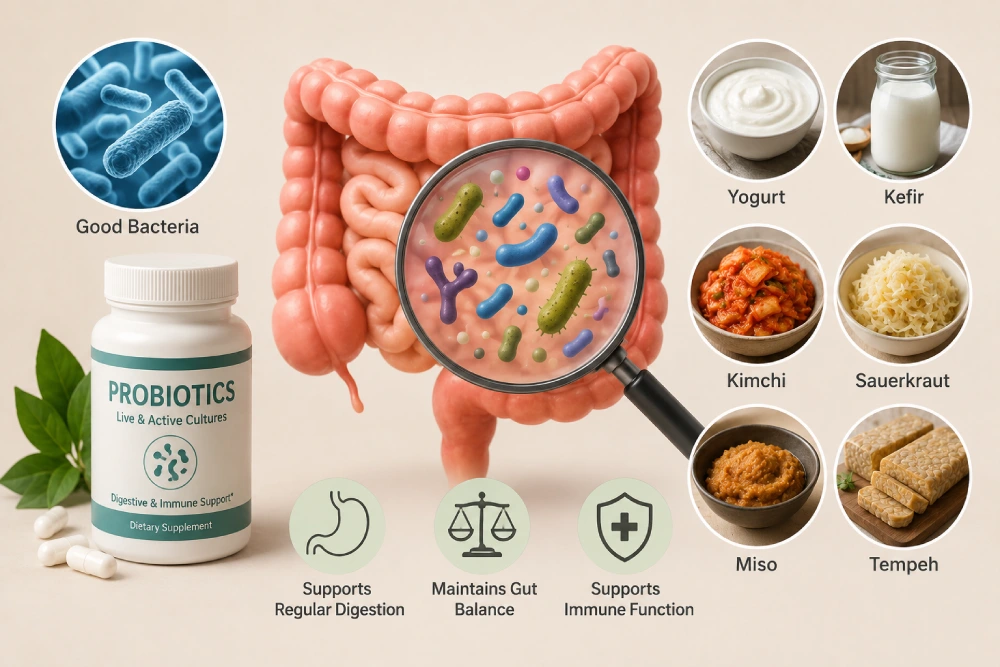
Probiotics are live microorganisms, mostly bacteria and some yeast, that offer a health benefit when you get enough of them into your system. Think of them as the good bacteria your gut already relies on, just added in higher numbers.
The most common strains you will see on labels, according to the National Center for Complementary and Integrative Health:
- Lactobacillus and Bifidobacterium strains, some of which have shown a role in easing gas and bloating tied to irritable bowel syndrome
- Saccharomyces boulardii, a yeast studied for diarrhea linked to antibiotic use
- Lactobacillus rhamnosus GG, another well-studied option for the same purpose
A label that just says “contains probiotics” without naming the exact strain does not tell you much. The genus and species matter, but the strain code, the specific number attached to the name, is where the real research usually sits.
Where to find probiotics:
- Yogurt with live cultures
- Kefir
- Kimchi
- Sauerkraut
- Miso
- Tempeh
Not every fermented food carries live bacteria by the time it reaches your plate. Some are heated during processing, which kills off the bacteria. If you are eating for the live culture benefit, check the label for phrasing like “live and active cultures.”
What problem do probiotics actually address? For most people, they support regular digestion, help keep the balance of good and less helpful bacteria in check, and play a role in normal immune function. If your main concern is occasional bloating, irregularity, or overall gut balance, probiotics are usually the first place to start.
One honest note: probiotics are strain specific. A strain that helps with bloating may do nothing for someone dealing with a different gut issue, so picking a named, studied strain matters more than picking a product just because the word “probiotic” sits on the front of the box.
What Are Prebiotics
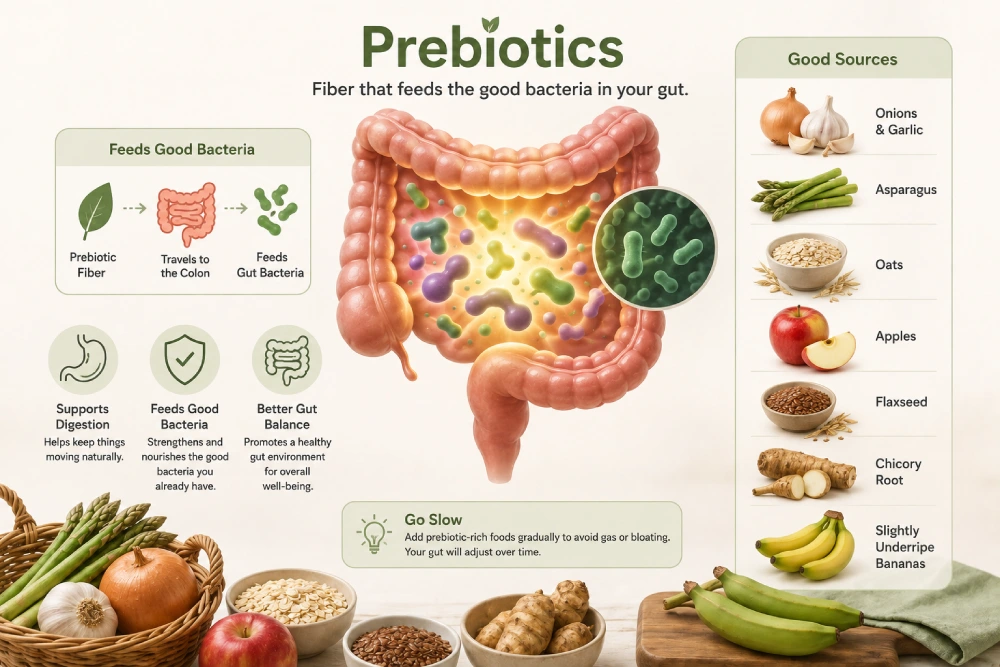
Prebiotics are a type of fiber that your body cannot break down on its own, as Cleveland Clinic explains. Instead of being digested by you, this fiber travels down to your colon, where your gut bacteria use it as food.
A few common types worth knowing by name, since you will see them on ingredient lists:
- Inulin, found in chicory root and Jerusalem artichoke
- Fructo-oligosaccharides (FOS), often added to supplements
- Galacto-oligosaccharides (GOS), frequently added to supplements and infant formulas
You do not need to memorize the chemistry, just know that these are all types of fiber that feed your existing gut bacteria in slightly different ways.
Where to find prebiotics:
- Onions and garlic
- Asparagus
- Oats
- Apples
- Flaxseed
- Chicory root
- Slightly underripe bananas
Most people already eat some prebiotics without realizing it, since these show up in ordinary fruits, vegetables, and whole grains.
What problem do prebiotics address? Rather than adding new bacteria to your gut, prebiotics feed the good bacteria you already have. If you already eat a reasonably varied diet but want to give your existing gut bacteria a better food source, prebiotics are often the more useful choice compared to adding more live bacteria on top.
One caution: prebiotic fiber can cause gas or bloating if you increase your intake too fast. This usually settles down once your gut adjusts, but it makes sense to add these foods bit by bit rather than all at once.
What Are Postbiotics
Postbiotics are the newest and most easily misunderstood of the three terms.
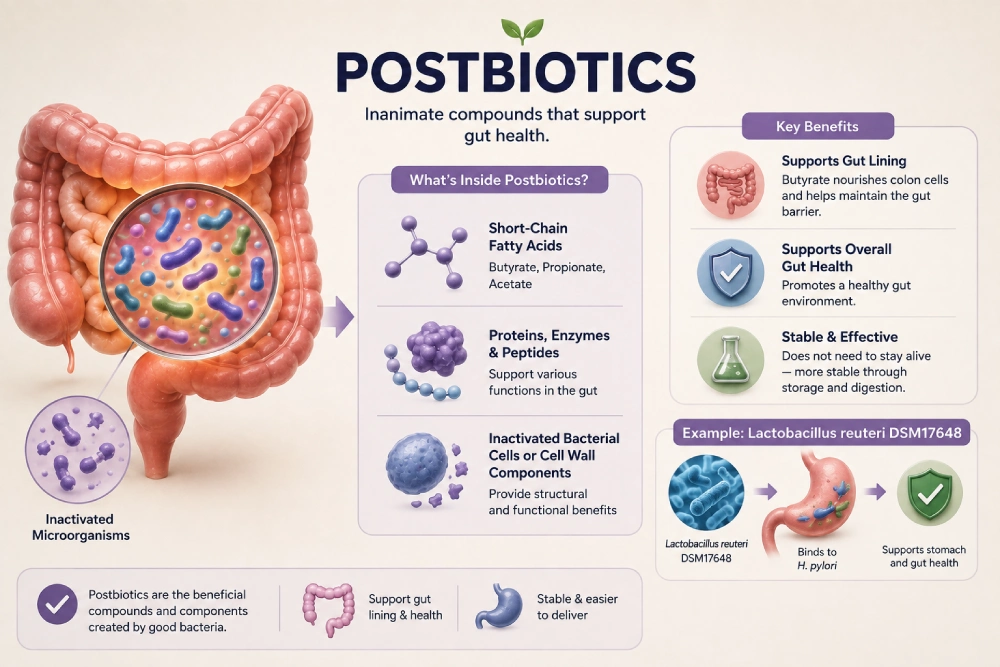
A postbiotic is not simply “waste” left behind by bacteria. The International Scientific Association for Probiotics and Prebiotics defines postbiotics as preparations of inanimate microorganisms, with or without their components or metabolites, that provide a health benefit.
Common postbiotic-related substances include, as Cleveland Clinic notes:
- Short-chain fatty acids such as butyrate, propionate, and acetate
- Certain proteins, enzymes, and peptides
- Inactivated bacterial cells or parts of bacterial cell walls
Butyrate is useful to know because colon cells use it as an energy source, and it plays a role in maintaining the gut lining. It forms naturally when gut bacteria ferment fiber in the colon.
The practical advantage of postbiotics is that they do not need to stay alive. This makes them different from probiotics, which must remain viable through storage, digestion, and delivery to the gut.
One example of a postbiotic ingredient used in gut health products is Lactobacillus reuteri DSM17648, also known by the trade name Pylopass. This strain is used in an inactivated form and has been studied for how it binds to H. pylori in the stomach. We will look at that research later in this guide.
How They Work Together
The easiest way to picture this relationship is as a simple chain of events.
- You eat a prebiotic, like fiber from garlic or oats.
- Your gut bacteria, which act as probiotics, break this fiber down as food.
- As they digest it, they produce postbiotics as a byproduct.
So the order runs: prebiotic feeds probiotic, and probiotic activity creates postbiotic.
This does not mean you always need all three at once. Someone eating a fiber-rich diet is already feeding their gut bacteria, which naturally produces postbiotics along the way. Someone who wants to add new bacteria might reach for a probiotic. Someone who wants the downstream benefits without worrying about live bacteria surviving digestion might look at a postbiotic product instead. Knowing this chain also explains why some products combine two or three of these ingredients together.
Synbiotics: The Bonus Term
You may also come across the word synbiotic on a label. A synbiotic is simply a product that combines a probiotic with a prebiotic fiber meant to feed it.
There are two types:
- Complementary synbiotic: pairs a probiotic and a prebiotic that each work fine on their own
- Synergistic synbiotic: uses a prebiotic chosen on purpose to support the exact probiotic strain it is paired with
Either way, the idea is the same: give the good bacteria both the boost and the food at the same time.
Common Gut Health Myths, Cleared Up
A few beliefs about these ingredients show up again and again, and most of them are not quite right.
- More CFUs always means a better probiotic. Not true. Some strains work at a few hundred million CFU, while others need tens of billions to show an effect. A higher number on a label does not automatically mean a stronger product. What matters more is whether that strain has been studied at that dose.
- Probiotics need to be taken forever to work. Not always. Many studies test probiotics over a set window, often two to eight weeks, rather than as a lifetime commitment.
- Postbiotics are just a marketing rebrand of probiotics. They are not. A postbiotic product does not contain live bacteria at all, and that single difference changes how it is made, stored, and used.
- Fermented food and probiotic food mean the same thing. Not quite. Some fermented foods, like most bread and canned pickles, go through a heating step that kills off the live bacteria, so the fermentation happened, but the live culture did not survive to the final product.
- If a small amount helps, a large amount will help more. Not with fiber. Going too high too fast is the most common reason people give up on prebiotic products, since the bloating can feel worse than the original problem.
What the Research Actually Supports
It helps to be honest about where the science is solid and where it is still developing, since gut health content tends to overstate what is actually known.
- Reasonably well supported: probiotics and prebiotics have shown a role in supporting regular digestion and a normal balance of gut bacteria. Certain probiotic strains have shown benefit for gas and bloating tied to irritable bowel syndrome, and for diarrhea linked to antibiotic use. Postbiotics have shown a similar pattern of support for gut and immune health, with the added benefit of not needing live bacteria to work.
- Mixed or still limited: research on probiotics and prebiotics for preventing traveler’s diarrhea has produced some encouraging results, but the evidence is inconsistent enough that major travel medicine guidelines have not recommended it outright.
- Still early: researchers are looking into links between gut bacteria and mood, sleep, and metabolic health, an area Mayo Clinic describes as still developing. These are genuinely interesting areas, but the researchers involved are themselves clear that there is more to learn before firm conclusions can be drawn.
If you see a product claiming a probiotic will treat anxiety or cure a metabolic condition, that claim is running ahead of the evidence. This guide sticks to describing what these ingredients support, not what they treat or cure, since that distinction matters both for accuracy and for setting your own expectations correctly.
Editorial Review and Source Method
This article was reviewed internally for source accuracy, claim consistency, and product-label alignment. It has not been medically reviewed by a physician.
The article relies on publicly available sources including ISAPP consensus documents, NCCIH safety information, Cleveland Clinic educational material, Mayo Clinic guidance, and published clinical research on Lactobacillus reuteri DSM17648.
The goal is to explain gut health terms clearly without presenting supplements as a substitute for diagnosis, prescription treatment, or doctor-guided care.
Safety: Who Should Be Careful
For most healthy adults, probiotics, prebiotics, and postbiotics are well tolerated. That said, a few practical points are worth knowing.
- Probiotics: since they are live organisms, they carry a very small chance of causing an infection or unwanted reaction in people with weakened immune systems or serious existing illness, per the National Center for Complementary and Integrative Health. This is rare, and mostly reported in people already dealing with a serious medical condition. Anyone who is immunocompromised, critically ill, pregnant, or nursing should check with a doctor before starting a new probiotic.
- Prebiotics: generally easier to tolerate, since they are just fiber, but they can cause gas, bloating, or stomach discomfort if you take too much too quickly. Starting with a small amount and building up over a week or two is a sensible way to avoid this.
- Postbiotics: tend to have an easier safety profile than probiotics, mainly because they do not involve live bacteria at all, which removes the small infection-related risk that live products carry.
- Antibiotics: if you are taking them, space your probiotic dose a few hours apart from the antibiotic dose, since antibiotics can kill off the live bacteria in a probiotic if taken at the same time.
- When to stop: if you notice a rash, ongoing vomiting, or symptoms beyond mild, temporary bloating, stop the product and speak with a doctor.
None of this is meant to alarm you. It is meant to help you make an informed choice, and starting low while paying attention to how your body responds is a sensible approach with any new gut health product.
How to Choose a Supplement
If you are standing in front of a shelf of options, here is what actually matters.
- Look for a named strain, not just a general category. “Contains probiotics” tells you very little. “Contains Lactobacillus reuteri DSM17648” tells you exactly what you are getting and lets you look up the actual research behind it.
- Check the CFU count, and check where it is measured. CFU stands for colony forming units, a way of counting live bacteria. The number that matters is the CFU guaranteed at the end of the product’s shelf life, not at the time it was made, since live bacteria counts naturally drop during storage. A product that only lists CFU “at time of manufacture” is telling you less than it seems to be.
- Look for third-party testing or a certificate of analysis if the brand offers one. This is a simple way to check that a product contains what the label claims.
- Consider shelf stability. This is where postbiotic products have a practical edge, since they do not rely on keeping bacteria alive through storage and shipping.
Whatever you choose, a product built around a named, studied strain will generally serve you better than one that just lists a broad category with no further detail.
Case Study: Lactobacillus reuteri DSM17648 and H. pylori
To make all of this less abstract, it helps to look at one strain that has actually been studied in real clinical research.
Lactobacillus reuteri DSM17648 was identified through a large screening process that looked at more than seven hundred different Lactobacillus strains, searching for one that could bind closely to a stomach bacteria called H. pylori. H. pylori is a common bacteria that can settle in the stomach lining and, in some people, contribute to ongoing digestive discomfort.
What the research found:
In one pilot study , adults who carried H. pylori took the inactivated DSM17648 strain for two weeks. Researchers measured H. pylori levels afterward using a standard breath test, and the group who took the strain showed a clear drop in H. pylori levels compared to the group who did not.
A follow-up study extended the period to four weeks and also tracked mild digestive symptoms, finding an improvement alongside the drop in H. pylori load.
A multi-center clinical trial looked at whether adding this same strain to standard H. pylori treatment made a difference for people also dealing with functional dyspepsia, a common term for ongoing stomach discomfort without a clear structural cause. The strain was used alongside standard treatment, not as a replacement for it, and the research described it as a postbiotic, since the bacteria used are inactivated rather than alive.
Comparison Table
| What it is | Live bacteria | Fiber that feeds bacteria | Leftover substances from bacteria, alive or not |
| Needs to be alive | Yes | Not applicable | No |
| Common food sources | Yogurt, kefir, kimchi, sauerkraut | Garlic, onions, oats, apples, flaxseed | Fermented foods, sourdough, some supplements |
| Main support | Adds good bacteria | Feeds existing good bacteria | Delivers support without live bacteria |
| Storage | Needs care to keep bacteria alive | Stable | Very stable |
| Common caution | Rare infection risk in vulnerable groups | Gas or bloating at high doses | Fewer live-bacteria related concerns |
Quick Answers
What is the difference between probiotics, prebiotics, and postbiotics?
Probiotics are live microorganisms that may support health when taken in adequate amounts. Prebiotics are fibers or compounds that feed beneficial gut bacteria. Postbiotics are inactivated microorganisms, their components, or their metabolites that may provide a health benefit without needing live bacteria.
Do I need to take probiotics, prebiotics, and postbiotics together?
Not necessarily. Many people get enough prebiotics through a normal varied diet, which already supports the gut bacteria they have. Whether you need an added probiotic or postbiotic depends on your specific gut health goal.
Are postbiotics safer than probiotics?
Postbiotics tend to have an easier safety profile since they do not involve live bacteria, which removes the small infection-related risk tied to live probiotics. Both are considered well tolerated by most healthy adults.
What foods have probiotics and prebiotics?
Probiotic foods include yogurt with live cultures, kefir, kimchi, sauerkraut, miso, and tempeh. Prebiotic foods include garlic, onions, oats, apples, flaxseed, and chicory root.
Is Lactobacillus reuteri a probiotic or a postbiotic?
The specific strain DSM17648, sold under the name Pylopass, is used in an inactivated form, which places it in the postbiotic category, even though Lactobacillus reuteri as a species is more commonly known as a probiotic when used alive.
How long does it take to notice a difference?
This depends on the strain and the reason you are taking it. Some studies on digestive comfort show a change within two to four weeks, while others take longer. If you notice no change after a couple of months, it is a fair time to check in with a doctor or reconsider the product.
Can children take probiotics, prebiotics, or postbiotics?
Some strains have been studied in children, particularly for digestive issues, but dosing and strain choice differ from what works for adults. A pediatrician should guide any decision here rather than an adult-labeled product.
Medical Disclosure
This article is written for general information and reader education.- It is not medical advice, and it is not meant to diagnose, treat, cure, or prevent any disease or condition.
- The strains, studies, and products mentioned in this guide are described for informational purposes and are not a guarantee of any specific outcome for any individual reader.
- Always talk to a doctor or a qualified healthcare provider before starting any new supplement, and especially before making any changes if you are pregnant, nursing, immunocompromised, managing a chronic illness, or currently undergoing treatment for H. pylori or another diagnosed condition.
- Do not stop or delay any prescribed medical treatment, including antibiotic therapy for H. pylori, in favor of a supplement without first speaking to your doctor.
- The information in this guide reflects published research available at the time of writing. Gut health research is an active and ongoing field, and findings may be refined or updated as more studies are published.
References
- International Scientific Association for Probiotics and Prebiotics (ISAPP). Consensus statement on the definition and scope of postbiotics. https://isappscience.org/resource/expert-consensus-document-the-international-scientific-association-for-probiotics-and-prebiotics-isapp-consensus-statement-on-the-definition-and-scope-of-postbiotics/
- International Scientific Association for Probiotics and Prebiotics (ISAPP). Consensus statement on the definition and scope of prebiotics. https://www.nature.com/articles/nrgastro.2017.75
- International Scientific Association for Probiotics and Prebiotics (ISAPP). Consensus statement on the definition and scope of synbiotics. https://www.ncbi.nlm.nih.gov/pmc/articles/PMC7581511/
- Cleveland Clinic. Prebiotics vs. Probiotics: What’s the Difference? https://health.clevelandclinic.org/prebiotics-vs-probiotics-whats-the-difference
- Cleveland Clinic. What Are Postbiotics? https://health.clevelandclinic.org/postbiotics
- National Center for Complementary and Integrative Health (NCCIH). Probiotics: Usefulness and Safety. https://www.nccih.nih.gov/health/probiotics-usefulness-and-safety
- Mayo Clinic. Probiotics and prebiotics: What you should know. https://www.mayoclinic.org/healthy-lifestyle/nutrition-and-healthy-eating/expert-answers/probiotics/faq-20058065
- Holz C, Busjahn A, Mehling H, et al. Significant Reduction in Helicobacter pylori Load in Humans with Non-viable Lactobacillus reuteri DSM17648: A Pilot Study. https://pmc.ncbi.nlm.nih.gov/articles/PMC4415890/
- Mehling H, Busjahn A. Non-viable Lactobacillus reuteri DSMZ 17648 (Pylopass) as a New Approach to Helicobacter pylori Control in Humans. https://www.ncbi.nlm.nih.gov/pmc/articles/PMC3775242/
- Efficacy and Safety of Postbiotic Contained Inactivated Lactobacillus reuteri (Limosilactobacillus reuteri) DSM17648 as Adjuvant Therapy in the Eradication of Helicobacter pylori in Adults With Functional Dyspepsia. https://www.ncbi.nlm.nih.gov/pmc/articles/PMC11421730/
- Tolerance of probiotics and prebiotics. https://pubmed.ncbi.nlm.nih.gov/15220662/
